
How to Price Custom Laser Engraving Without Undervaluing Yourself
A Practical Guide for Canadian Makers, Small Businesses, and Side Hustlers
One of the hardest parts of running a laser engraving business isn’t learning how to use the machine.
It’s figuring out what to charge.
Across Canada, makers are creating everything from personalized cutting boards and cottage signs to corporate awards, hockey team plaques, wedding décor, and custom gifts. Yet many new laser business owners make the same mistake:
They charge far too little.
They calculate the cost of wood or acrylic, add a small markup, and assume they’re making money.
Unfortunately, that’s rarely enough to build a sustainable business.
The truth is that customers aren’t just paying for materials or machine time. They’re paying for your design skills, customization, expertise, and the convenience of receiving a product made specifically for them.
If you want your laser engraving business to grow, you need a pricing strategy that reflects the true value of your work.
The Most Common Pricing Mistake
A typical beginner pricing model looks something like this:
- Maple cutting board: CAD $15
- Engraving time: CAD $2
- Packaging: CAD $3
Total cost: CAD $20
Selling price: CAD $35
Apparent profit: CAD $15
At first glance, that seems reasonable.
But what about:
- Design time
- Customer communication
- File preparation
- Equipment maintenance
- Electricity
- Marketing
- Marketplace fees
- Failed projects
- Shipping supplies
- Business overhead
Once these costs are included, that CAD $15 profit quickly becomes much smaller.
Many laser business owners discover they’re working long hours for far less income than expected.
Know Your True Costs First
Before setting any price, understand what it actually costs to produce each item.
Material Costs
Include everything used to create the product:
- Wood
- Acrylic
- Leather
- Paints and finishes
- Adhesives
- Packaging materials
- Shipping supplies
Even small consumables add up over time.
Machine Costs
Every job contributes to wear and tear on:
- Laser tubes
- Lenses and mirrors
- Cleaning supplies
- Ventilation systems
- Electricity usage
While these costs may seem small per project, they should be built into your pricing.
Your Time
This is where many businesses lose money.
Consider time spent on:
- Creating designs
- Answering customer questions
- Preparing artwork
- Machine setup
- Production
- Finishing
- Packaging
Your time has value, even when the laser isn’t actively engraving.
Customers Buy Outcomes, Not Materials
Most customers don’t care how much plywood or acrylic was used.
They care about the result.
For example:
A real estate agent doesn’t buy an engraved cutting board.
They buy a memorable closing gift that strengthens client relationships.
A couple planning a wedding doesn’t buy an acrylic welcome sign.
They buy a personalized experience for one of the most important days of their lives.
A business doesn’t buy an award plaque.
They buy a way to recognize and motivate employees.
Understanding the value behind the product makes pricing much easier.
Use a Three-Tier Pricing Strategy
Many successful Canadian makers use multiple pricing levels.
Basic Pricing
Covers:
- Materials
- Production costs
- Labour
This is your minimum acceptable price.
Standard Pricing
Includes:
- Customization
- Design work
- Customer service
- Healthy profit margins
This is often where most sales occur.
Premium Pricing
Ideal for:
- Rush orders
- Complex artwork
- Premium materials
- Gift packaging
- Corporate projects
Many customers are happy to pay extra for convenience and exclusivity.
Don’t Give Away Design Work
Custom laser projects often involve more design time than production time.
Consider:
- 15 minutes engraving
- 45 minutes preparing artwork
- 20 minutes revising customer requests
The laser may run for only a small portion of the project.
You do most of the work.
This is why many successful businesses charge separately for:
- Logo creation
- Artwork setup
- Additional revisions
- Custom design services
Corporate clients are especially accustomed to paying for professional design work.
Value-Based Pricing Beats Cost-Based Pricing
Imagine two products:
Product A
Material cost: CAD $20
Selling price: CAD $50
Profit: CAD $30
Product B
Material cost: CAD $20
Selling price: CAD $150
Profit: CAD $130
The materials are identical.
The difference is perceived value.
Products that often command higher prices include:
- Corporate awards
- Business signage
- Wedding décor
- Personalized gifts
- Branded merchandise
- Premium home décor
Customers pay for meaning, usefulness, and presentation—not just raw materials.
Don’t Compete on Price Alone
There will always be someone willing to sell cheaper.
Competing solely on price often leads to:
- Lower profits
- More stress
- Difficult customers
- Slower business growth
Instead, compete through:
- Better craftsmanship
- Faster turnaround
- Superior service
- Unique designs
- Reliable quality
Many Canadian customers are willing to pay more for a business they trust.
Set Minimum Order Values
Small orders often require the same amount of administration as larger ones.
A single personalized keychain may involve:
- Emails
- Artwork setup
- Machine preparation
- Production
- Packaging
That’s why many businesses establish:
- Minimum order values
- Setup fees
- Minimum quantities
These policies help protect profitability.
B2B Customers Can Transform Your Revenue
Many successful Canadian laser businesses grow through business-to-business sales.
Potential clients include:
- Real estate agencies
- Schools
- Sports associations
- Restaurants
- Construction companies
- Tourism businesses
- Local retailers
For example:
One order for 100 branded tumblers can generate more revenue than dozens of individual online sales.
B2B clients often provide:
- Larger orders
- Repeat business
- More predictable income
- Better profit margins
Take Advantage of Seasonal Demand
Canada has several strong seasonal sales periods:
- Christmas
- Father’s Day
- Mother’s Day
- Graduation season
- Hockey tournaments
- Wedding season
- Corporate holiday gifting
During peak periods, customers are often less price-sensitive and more focused on receiving high-quality personalized products on time.
Your pricing strategy should reflect this increased demand.
Confidence Is Part of Your Pricing
Many makers know they’re undercharging.
They’re simply afraid to raise prices.
The reality is that customers who only care about finding the lowest price are rarely your best customers.
The best customers value:
- Quality
- Professionalism
- Reliability
- Customization
- Great service
Your goal shouldn’t be to be the cheapest option.
Your goal should be to offer the best value.
Reliable Equipment Supports Premium Pricing
When your equipment consistently produces professional results, it’s easier to justify higher prices.
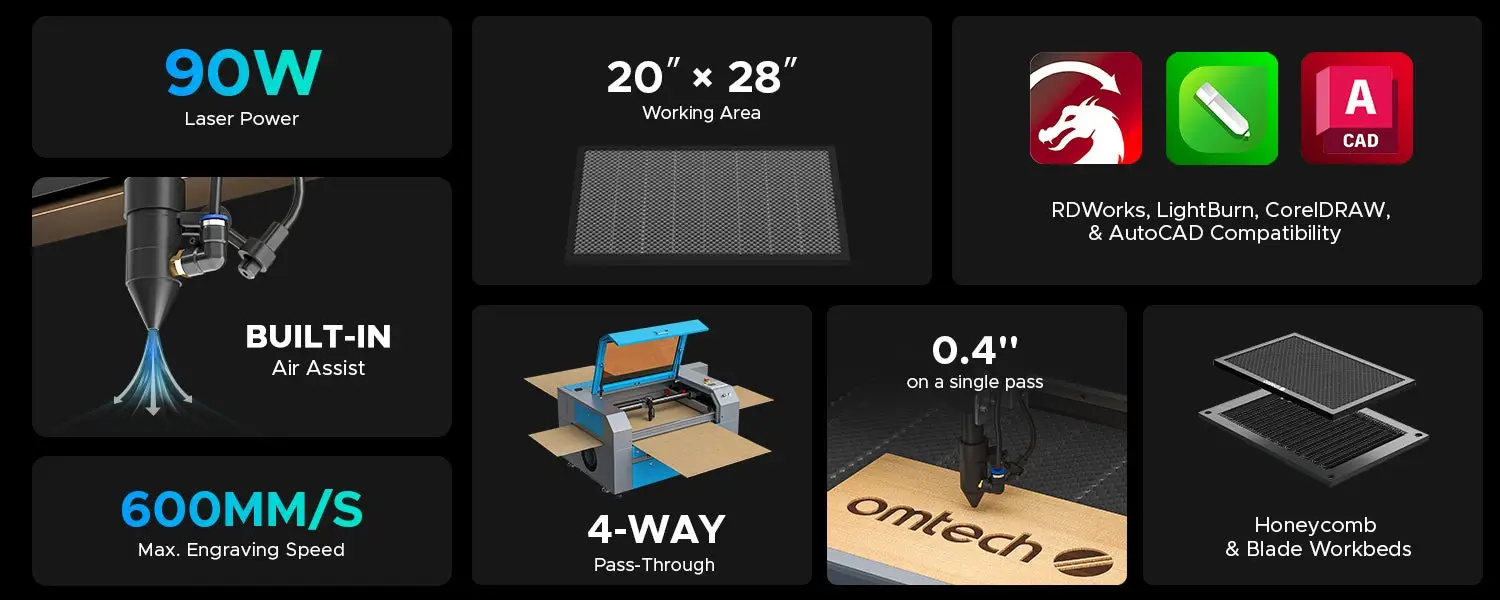
OMTech laser machines help Canadian businesses create:
- Custom signs
- Corporate awards
- Personalized gifts
- Promotional products
- Event décor
- Educational projects
With the ability to engrave and cut wood, acrylic, leather, glass, rubber, and coated metals, OMTech machines allow businesses to diversify their product offerings and expand into new markets.
Final Thoughts
The biggest pricing mistake in laser engraving isn’t charging too much.
It’s charging too little.
Your customers aren’t simply paying for wood, acrylic, or machine time.
They’re paying for:
- Your expertise
- Your creativity
- Your customization skills
- Your customer service
- The finished result
To build a profitable laser engraving business:
- Know your true costs.
- Value your time.
- Charge for design work.
- Focus on value, not just materials.
- Avoid competing solely on price.
- Build a sustainable pricing strategy.
The most successful laser businesses in Canada aren’t the cheapest.
They’re the ones that understand the value they create—and price their work accordingly.


